Review Stock Valuation
Understand the current value of your stock, the average cost of each item, and the history behind it.
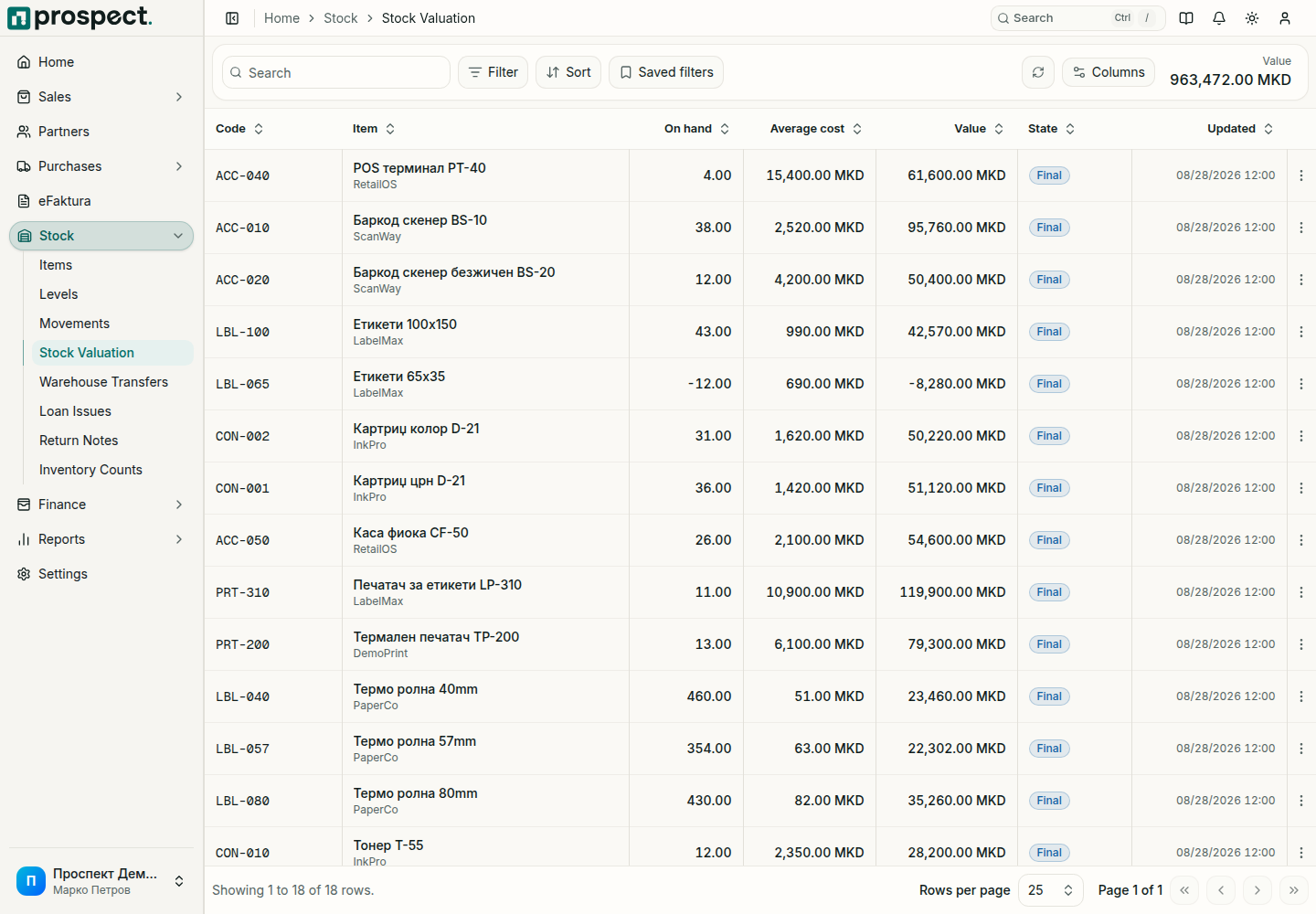
Open Stock → Stock Valuation. For every product the list shows the quantity, the average cost, the Value, and whether the cost is Final or Provisional. Select an item to see its history: every receipt, issue and correction with the change in quantity and value and the cost after it.
How the value is calculated
Prospect values stock at moving weighted average cost, shown in the app as the average purchase price. Each item has one average cost across all warehouses, and it is recalculated with every receipt.
- A receipt adds quantity and purchase value and changes the average cost.
- Finalized landed costs (freight, customs and similar) raise the purchase value of the goods received; see Landed costs. Until the costing is finalized the cost is Provisional.
- An issue (delivery, supplier return, a shortage on a count) reduces stock at the current average cost.
- A transfer between warehouses moves quantity without changing the cost, so every warehouse shows the same average cost for an item.
When a value looks wrong
Check unexpected values by tracing the source receipts, supplier documents, costings, returns, reversals and backdated documents. A later backdated change recalculates the movements after it.
If a backdated issue would take stock below zero on its date, posting stops and names the item, the date and the shortfall. Post the missing receipt first or correct the date. When the negative-stock policy allows an authorized override, the movement can be posted and the negative balance is carried at the last average cost until a receipt covers it.
Boundary with accounting
Stock valuation is an operational inventory measure. The accounting export turns the operational events into balanced lines, while the external accounting system remains the statutory ledger. Review period totals with your accountant before filing.
See Accounting handoff and Stock reports.